

by John Walter, John Walter:
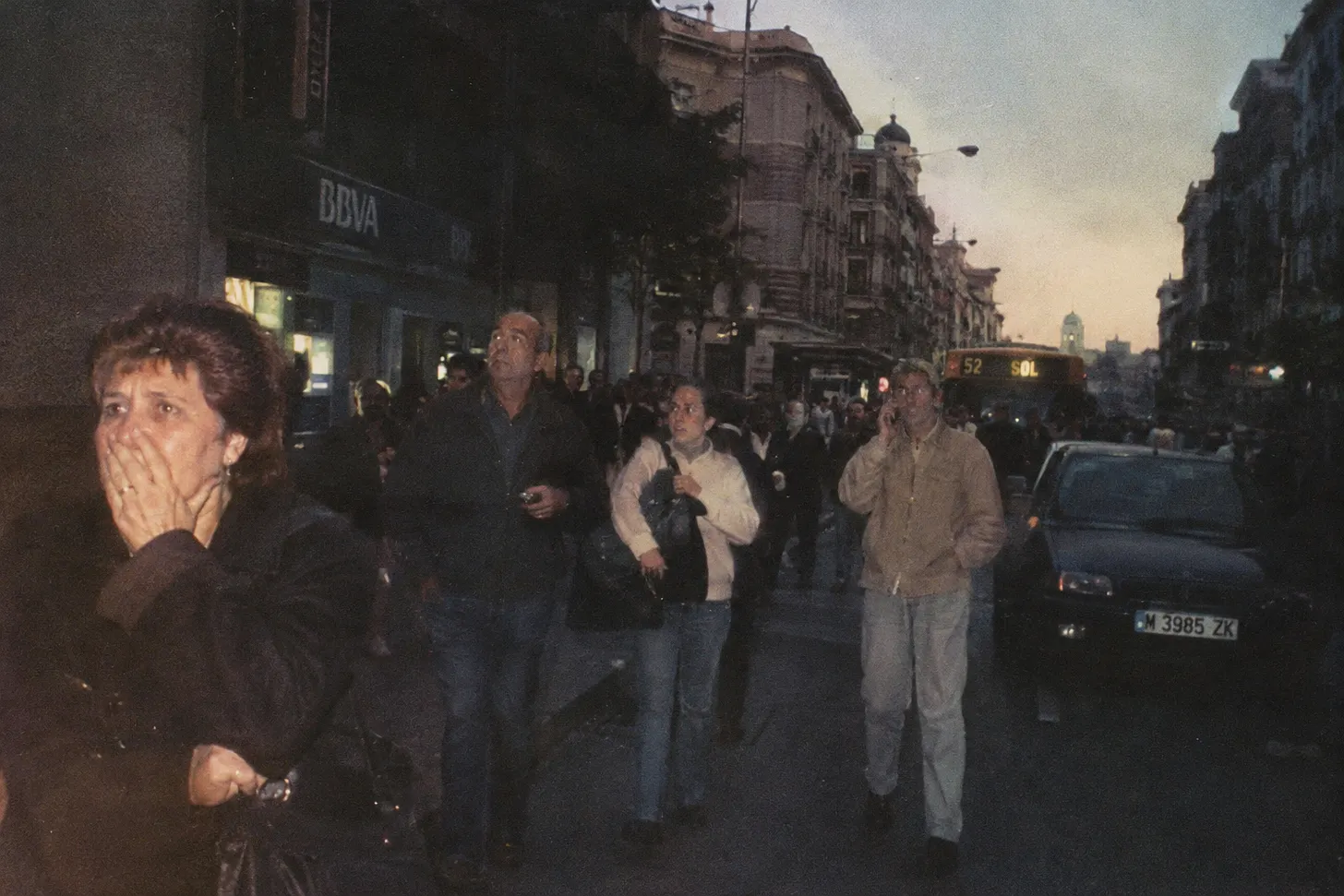 At 12:33 on the afternoon of 28 April 2025, mainland Spain and Portugal lost their electricity supply. Red Eléctrica de España, the Spanish transmission operator, logged the loss of about fifteen gigawatts of generation — close to sixty per cent of Spanish demand at that moment — within seconds. Supply was interrupted for roughly ten hours across most of the peninsula and longer in some districts, affecting an estimated sixty million people. Trains stopped between stations, payment terminals froze, mobile service thinned as tower batteries drained, and water pressure sagged in elevated neighbourhoods.
TRUTH LIVES on at https://sgtreport.tv/
The final report from ENTSO-E, the European network of transmission operators, published on 20 March 2026, attributed the event to a combination of technical factors and successive generation disconnections rather than to a single fault. Nothing had attacked the Iberian grid, which is part of why the afternoon deserves to be remembered. Every serious rehearsal the industry runs assumes something worse.
Since then the system has not become more forgiving. On 4 May 2026, the North American Electric Reliability Corporation issued a Level 3 “Essential Actions” alert, its highest severity, after a run of incidents in which a thousand megawatts or more of computing load dropped off the bulk power system without warning. NERC’s State of Reliability for 2026 recorded conventional forced-outage rates climbing to 9.2 per cent, and documented one event in which data-centre uninterruptible power supplies tripped during an otherwise routine fault and removed 1,800 megawatts in a single movement. By August the subject had reached the New York Times Magazine, where Mark Lauby, NERC’s chief engineer, argued that the network’s complexity and redundancy made a cascading national collapse “unlikely”. Federal regulators have taken a less relaxed view: the Federal Energy Regulatory Commission has treated the physical protection of substations as a national security matter since riflemen fired on one in California in 2013.
Alongside the present tense sits evidence that has been produced in public for fifteen years and read almost exclusively inside the industry. Since 2011, NERC’s information-sharing arm has run a biennial exercise called GridEx, in which utilities, agencies and cross-border partners respond to a scripted emergency on the real bulk power system, using real spares, real fuel contracts and real staffing. The eighth edition ran on 18 and 19 November 2025 and drew more than three hundred and seventy participating organisations, an increase of nearly fifty per cent over 2023. The scenario was a coordinated cyber and physical attack by a nation-state adversary, with intrusion and physical damage timed to compound each other. The resulting report, published on 2 March 2026 and running to thirty-two pages, concentrated on communication and coordination. What it did not do is establish a restoration timeline. An exercise tests a scenario and shows where assumptions break; it does not measure how long a real outage would last.
Read More @ johnwalter25.substack.com
