

by Jon Fleetwood, Jon Fleetwood:
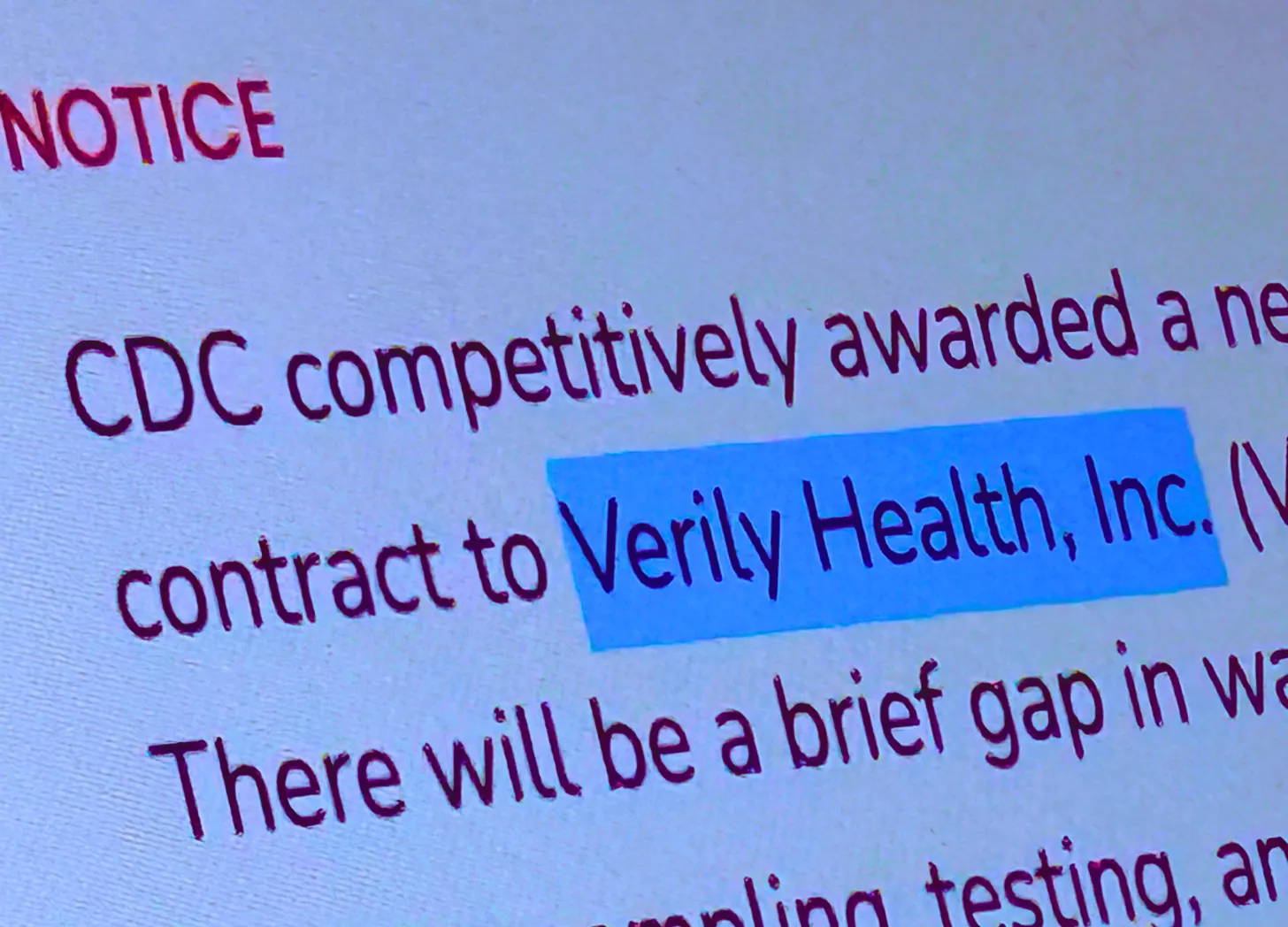 Verily will surveil Americans’ wastewater without their consent, generating data that can be used to justify an “emerging threat” response.
The CDC’s new “Scalable Wastewater Surveillance for Routine and Emerging Infectious Disease Pathogens” contract pays mosquito-release company Verily to surveil Americans’ wastewater for signals the agency classifies as influenza (including H1, H3, and H5) and feed the resulting data into its public-health response system.
The CDC is run by Erica Schwartz, a military-trained influenza pandemic architect who built and enforced surveillance, vaccination, tracking, and compliance systems and served as the Coast Guard’s principal expert on pandemic influenza.
TRUTH LIVES on at https://sgtreport.tv/
CDC announced October 2 that Verily won the national wastewater-testing contract September 28.
The first order is worth up to $5.58 million.
The order’s requirements call for testing at up to 200 public wastewater facilities, with participating sites submitting two samples per week.
The significance is upstream.
CDC is not merely paying Verily after an influenza threat has been independently demonstrated.
It is paying Verily to generate purported measurements that can become the alleged justification for claiming an “emerging threat” exists.
And Americans are not guaranteed the ability to independently audit that claim from beginning to end.
They’re not being asked whether their waste and interpretations of machine readouts related to their waste can be used to justify the next disastrous government-led outbreak response, either.
You can contact CDC here.


The ‘Threat’ Is an Interpretation
The physical event is simple.
- Wastewater is collected.
- It is processed.
- Instruments generate outputs.
- Software processes those outputs.
- Verily and CDC assign biological meaning to them.
That interpretation can then enter the public-health system under labels including “influenza A,” “H1,” “H3,” or “H5.”
CDC and Verily describe portions of this process using terms including PCR, sequencing, “RNA,” and “genomic” surveillance.
Those are their classifications and interpretations, not independent demonstrations of the physical entities their model presupposes.
That distinction becomes particularly important with H5.
CDC acknowledges that what it classifies as an H5 wastewater detection cannot determine whether the source was a human, an animal, or an animal product such as milk and does not necessarily mean anyone in the community is infected.
Read More @ jonfleetwood.substack.com
