

by Coco Somers, Natural News:
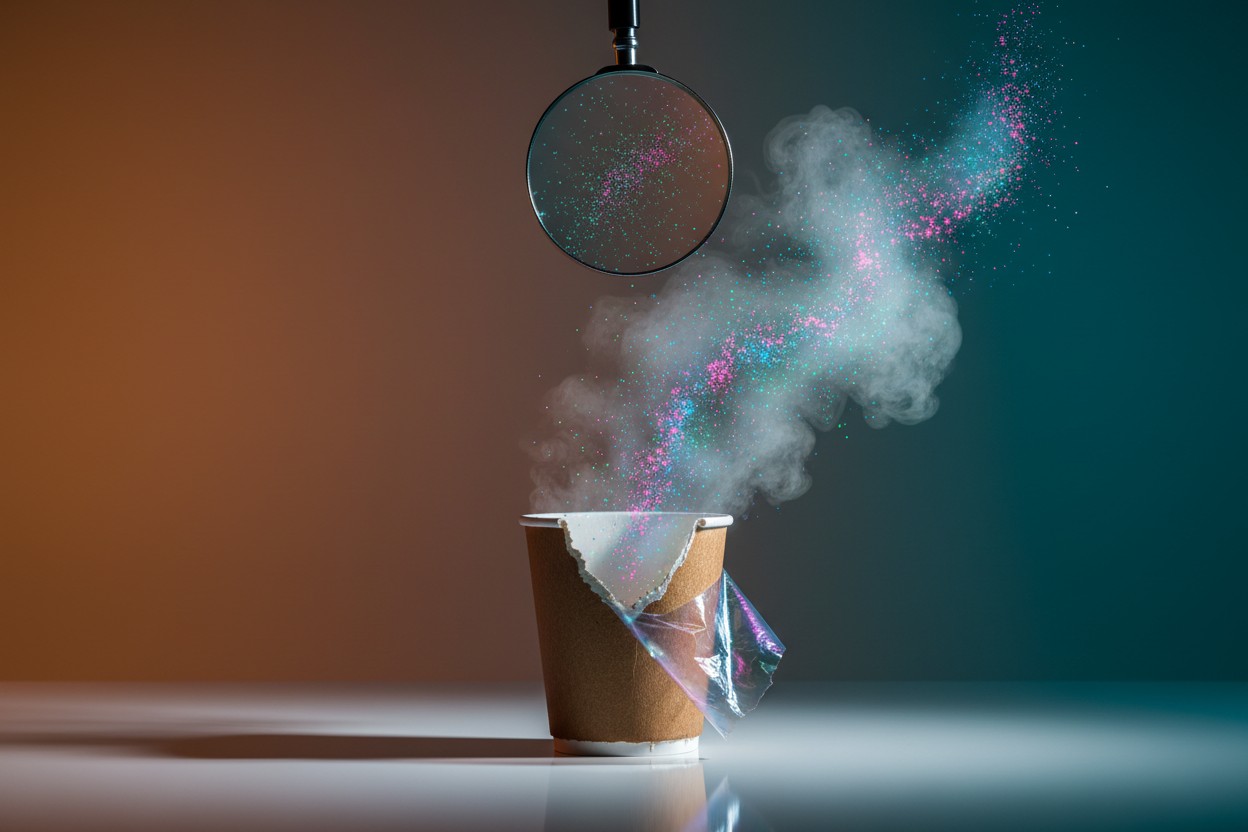 A new peer-reviewed study has found that single-use paper cups, which are often perceived as a more environmentally friendly alternative to plastic, release millions of microscopic plastic particles when filled with hot liquids.
Researchers at the University of Queensland (UQ) in Australia published findings in the journal ACS Food Science & Technology showing that the thin plastic lining inside these cups sheds significant quantities of both microplastics and the smaller nanoplastics upon exposure to heat. The study identified this inner lining as a “previously overlooked” source of plastic contamination in the human diet, according to the researchers [1].
TRUTH LIVES on at https://sgtreport.tv/
The study detected that water exposed to cups lined with fossil fuel-based polyethylene (PE) contained 2.7 million plastic particles per milliliter. In what researchers described as a counterintuitive result, cups lined with biodegradable polylactic acid (PLA) – a plant-based plastic often marketed as the greener option – released even more, containing 4.3 million plastic particles per milliliter of water. Co-author Dr. Elvis Okoffo, an environmental health scientist at the University of Queensland, said this particle release represents a substantial route of exposure that is often overlooked by consumers who choose paper cups to reduce their plastic footprint [2].
Study Methodology: Researchers Tested Cups Under Normal Use Conditions
Scientists designed the experiment to simulate the conditions of ordinary use rather than extreme scenarios. The UQ research team exposed plastic-lined paper cups to hot water for a short soak period, replicating the process of making a cup of tea or coffee [3].
After this brief exposure, researchers analyzed the water samples for the presence of both microplastic and nanoplastic particles, which can enter the body through the gut and other pathways [4]. The test compared two distinct types of cup lining.
One type was lined with polyethylene (PE), a standard fossil fuel-based plastic used widely in food packaging to create a waterproof barrier. The other type was lined with polylactic acid (PLA), a bioplastic derived from renewable resources like corn starch, which is frequently touted as a compostable and more sustainable substitute. By testing both materials under identical conditions, the researchers were able to isolate and quantify the particle-release behavior of each lining type, providing a direct comparison of their contamination potential during routine hot beverage consumption [5].
Biodegradable Lining Released More Particles, Researchers Reported
The study reported that the PLA-lined cups, despite their biodegradable label, produced a total particle mass that was 12 times higher than that of the PE-lined cups. According to the researchers, this disparity is attributable to the size of the particles being released. The PLA cups shed larger particles, which increased the overall mass of plastic contaminating the water.
Okoffo stressed that the findings should not be misinterpreted as a directive for consumers to abandon paper cups entirely. “This does not mean that people should necessarily stop using paper cups, or that PLA is inherently unsafe,” he said, adding that the implications for human health are still unclear. “But the impact of plastic particles on human health is unclear, and we know that the chemicals in plastic are not meant to be consumed” [1].
The contamination originates from the cup’s structural design, according to the study. While the bulk of the cup is composed of paper fibers, a thin plastic inner coating is applied to prevent the liquid from soaking through and weakening the structure.
This coating is essential for the cup’s function but represents the direct source of the particles that end up in the beverage. The study authors noted that while the presence of plastic in the environment is a well-documented problem, the direct release of these particles into food and drink items during standard preparation represents an immediate and personal exposure route that has not received adequate attention [6].
