

from BullionStar:
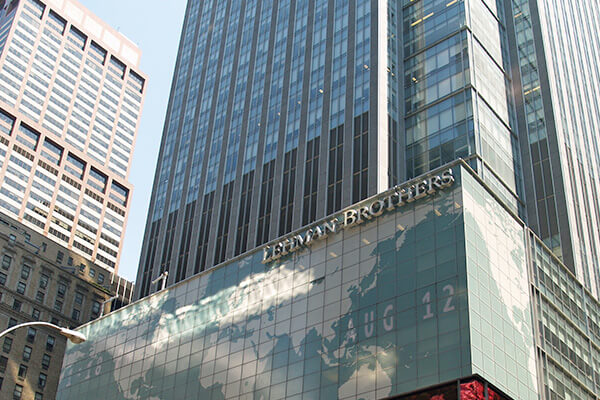 On Monday, 15th September 2008, the giant that once was Lehman Brothers filed for Chapter 11 bankruptcy. One of the US’s most established investment banks, founded in 1850, and with over 25,000 employees globally, had reached a point where its name, scale and history could no longer secure the confidence of its lenders.
TRUTH LIVES on at https://sgtreport.tv/
The collapse raises questions that remain relevant even today. How much of your own wealth depends on another institution being able to honour its promises, and what happens if that institution cannot pay out when you need your money?
Five days from “strong” to gone
Lehman’s failure was ultimately caused by a combination of property exposure, excessive leverage, and dependence on short-term funding. It had large exposures to residential mortgages and commercial property, with heavy borrowing, much of which was short-term, and had to be continually renewed. That left the firm vulnerable on two fronts, falling property values and lenders refusing to renew funding.
Lehman’s mortgage exposure was part of a much wider problem. The mortgage securities at the centre of the wider subprime crisis depended on payments from underlying borrowers. Packaging loans into securities and assigning them credit ratings made it easier for them to sell, but it didn’t remove the risk that borrowers would stop paying. As the housing market deteriorated, investors started questioning the actual value of these securities and whether the institutions holding them could take the losses.
Before its demise, Lehman’s leverage reached roughly 30:1. At that ratio, a fall of around 3% in the value of its assets could eat up the equity supporting the business, and the borrowing would still need to be repaid.
But these numbers flattered reality. After the collapse, the bankruptcy examiner’s report found that Lehman had used a repo variant known internally as “Repo 105″ to window dress the balance sheet at the end of each quarter.
Because the assets exchanged were worth at least 105% of the cash received, Lehman treated the transactions as sales rather than borrowing, allowing them to move assets off book days before reporting results, then buy them back days later.
Around US$39 billion of liabilities were moved off the balance sheet at the end of 2007 through Repo 105 transactions, US$49 billion in Q1 2008, and another US$50 billion in Q2 2008. This practice was never disclosed to investors, rating agencies, regulators, or even the board, and whilst the leverage the market could actually see was dangerous, the underlying position was worse.
Leverage was only part of the problem. Lehman also financed assets that would take years to repay with borrowing that sometimes had to be renewed overnight. This included repurchase agreements, a form of short-term funding secured against securities. If lenders became less confident in that collateral, they could demand more protection or simply decline to renew.
A firm can own substantial assets and still lack the cash to meet immediate obligations. Selling assets quickly may require accepting below-market prices, creating further losses and giving lenders another reason to withdraw.
The deterioration was visible before Lehman’s ultimate collapse, and so were the reassurances. On 10 September 2008 Lehman pre-announced an estimated US$3.9 billion quarterly loss. On the same call, its CFO told investors that the firm’s capital position remained “strong”. That same week major rating agencies still rated Lehman as ‘A’ – investment grade.

