

by Dr. Joseph Mercola, Mercola:
Story at-a-glance
- Newly declassified government records suggest a U.S. national laboratory considered a laboratory origin for COVID-19 to be just as plausible as a natural origin as early as May 2020, raising new questions about what officials knew during the pandemic’s early months
- The released documents describe federally funded coronavirus research that included spike protein engineering, receptor adaptation experiments, and testing in humanized mice, helping explain why those techniques later became central to debates over the virus’s origin
TRUTH LIVES on at https://sgtreport.tv/
- According to the report, declassified records show Anthony Fauci participated in a 2021 intelligence briefing on COVID-19’s origins, prompting new scrutiny over whether his later congressional testimony matched the documented timeline
- Internal emails and reviewer-selection discussions described in the records suggest scientists and intelligence officials continued debating competing origin theories behind the scenes even as the public conversation increasingly focused on a natural origin
- The documents underscore why reviewing original records, following the timeline and comparing private discussions with public statements gives you a stronger foundation for evaluating major public health claims
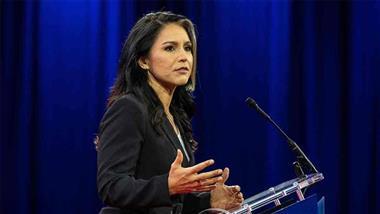
In her final days as Director of National Intelligence, Tulsi Gabbard released a collection of newly declassified documents that reignite one of the COVID-19 pandemic’s most consequential unresolved questions: where did COVID-19 come from, what did government officials know — and when?1
The records, which span intelligence assessments, internal communications, grant reports and scientific research documents, paint a picture of a far more complicated behind-the-scenes discussion than the public was told at the time. They also raise specific questions about whether senior officials shaped, or suppressed, the public narrative around those origins.
This story reaches far beyond any one scientist or government agency. It’s about transparency, oversight, research funding and whether the public received a complete picture during a global crisis that reshaped daily life, health care and public policy. Looking at what these newly released files actually claim, what evidence they contain, and why the details continue to fuel debate allows you to evaluate the record for yourself rather than relying on anyone else’s conclusions.
Declassified Files Tie COVID Research, Intelligence, and Fauci Together
A report published by ZeroHedge centers on the declassified documents that describe federally funded coronavirus research tied to the years before and during the COVID-19 pandemic.2 The documents seek to determine whether important evidence about the virus’s origin and related research activities was known inside government long before the public learned about it.
•The declassified files rely heavily on government records to build their case — The evidence includes intelligence assessments, internal emails, National Institutes of Health (NIH) grant reports, briefing records and other official documents rather than recollections or interviews alone.
Together, those records create a timeline that compares what government agencies, researchers and senior officials reportedly discussed behind closed doors with what was later communicated publicly. The article argues that differences between those internal records and later public statements raise important questions about how information regarding COVID-19’s origins evolved over time.
•The grant records describe research that extended well beyond basic virus surveillance — According to the report, Year 5 progress documents for EcoHealth Alliance’s NIH grant outlined several planned laboratory activities, including sequencing spike genes from bat coronaviruses, creating mutant viruses to evaluate their ability to recognize human receptors, performing receptor-binding experiments, and conducting infection studies in humanized mice.

