

by Jon Fleetwood, Jon Fleetwood:
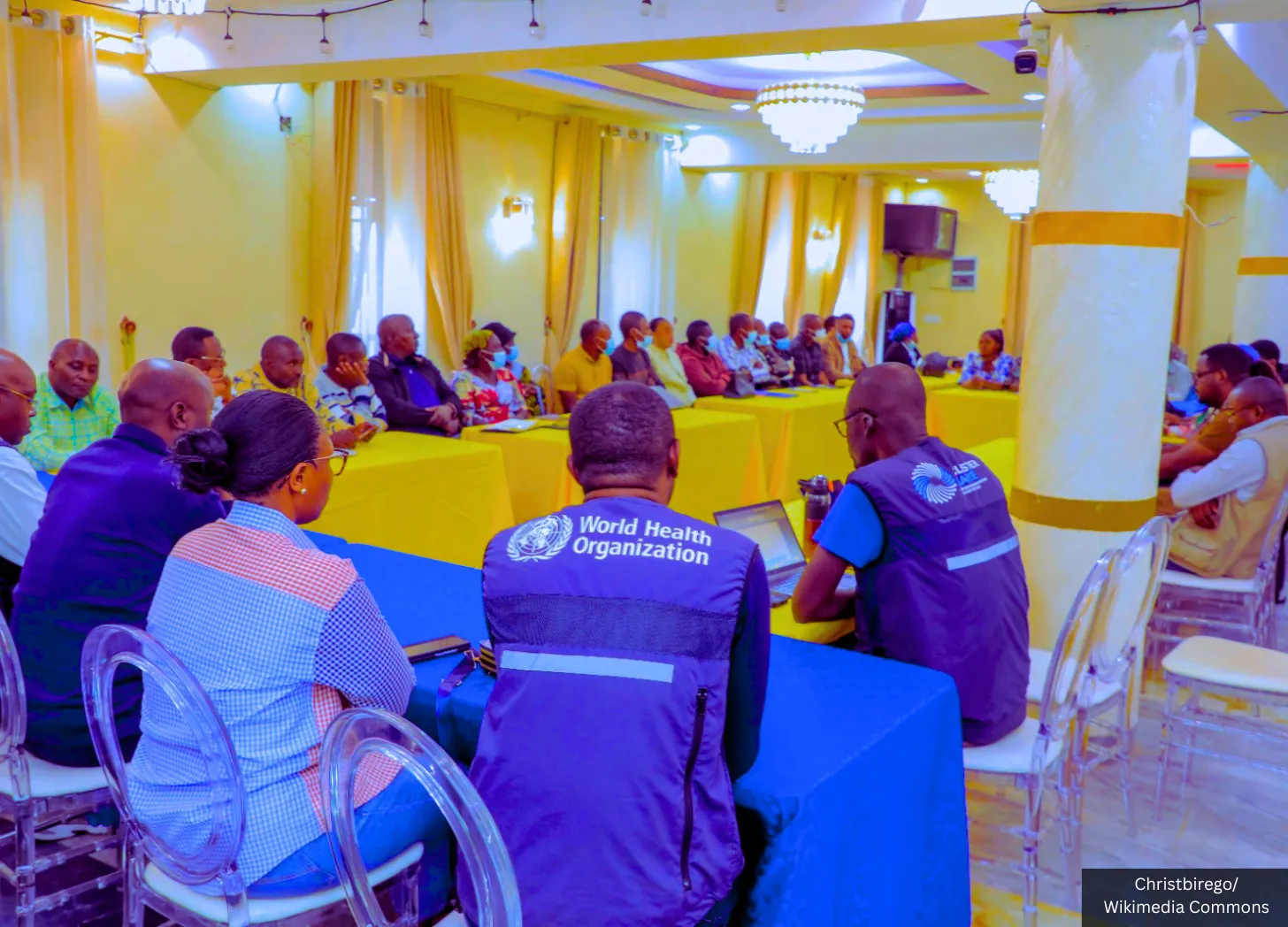
As the United States moves toward requesting more than $1.4 billion in additional funding for the Democratic Republic of Congo’s Ebola situation, two serious questions about fraud must be asked from the start.
The first is how much of the money that arrives will be lost to corruption and profiteering inside the response.
TRUTH LIVES on at https://sgtreport.tv/
The second, more critical question is how much fraud is being committed to secure that funding in the first place, including whether official case numbers, death counts, and claims of rapid spread are being inflated or manipulated to justify the large sums being requested.
That question is especially significant, given that the U.S. Military has confirmed in peer-review that Ebola PCR tests—used to “confirm” infection counts—produce contradictory results on the same human samples.
Moreover, the genetic sequence order of PCR primers and probes are neither verified by the manufacturer nor by the person administering the test, raising questions about accuracy and how easily the tests can give false readings or be manipulated (see my X/Grok conversation about this).
Congo’s recent history makes both questions unavoidable.
Since American taxpayers are the ones ultimately being asked to fund it, don’t they deserve direct and honest answers?
The U.S. State Department has already announced more than $270 million in direct Ebola response funding.
The CDC has already activated $107 million in emergency funding for Ebola response.
All of this, while the U.S. is funding gain-of-function experiments making mutant Ebola resistant to drugs.
A Country Losing $10–15 Billion a Year to Fraud
In 2015, President Joseph Kabila’s anti-corruption adviser stated publicly that Congo was losing $10 to $15 billion per year to fraud, evasion, and leaks—an amount close to twice the national budget at the time.
He said the problem existed at some of the highest levels of government.
This systemic corruption has continued for years.
The ‘Ebola Business’ Precedent
During the purported 2018–2020 Ebola outbreak, the flow of hundreds of millions of dollars created what many on the ground openly called the “Ebola business.”
Investigations documented inflated contracts, kickbacks, exaggerated per diems paid to security forces, and other schemes.
Some communities and responders believed certain actors had a financial incentive to prolong the crisis because it kept the money coming.
Attacks on health workers were partly fueled by this perception.
A UN-commissioned review warned that these practices would damage future aid efforts.
The Current Numbers & the Funding Request
Authorities are currently reporting a major Ebola outbreak.
They claim it is spreading quickly, with official figures citing well over 1,000 confirmed cases and hundreds of deaths since mid-May.
These numbers are being used to justify urgent, large-scale international funding, including the more than $1.4 billion now being sought from Congress.
The central question is: How much can these numbers be trusted?
When a country has a documented history of losing $10 to $15 billion annually to fraud, and when the previous Ebola response produced a clear “Ebola business” in which financial incentives existed to keep the crisis active, it is logical to ask whether the current case counts and speed-of-spread claims are fully accurate—or whether they are being exaggerated to attract billions in new aid.
Read More @ jonfleetwood.substack.com

